Maximalist Interior Design: How to Be Bold Without the Clutter
Maximalism isn't clutter, it's confidence — and these six rules are how designers make bold, colourful rooms that still feel considered.
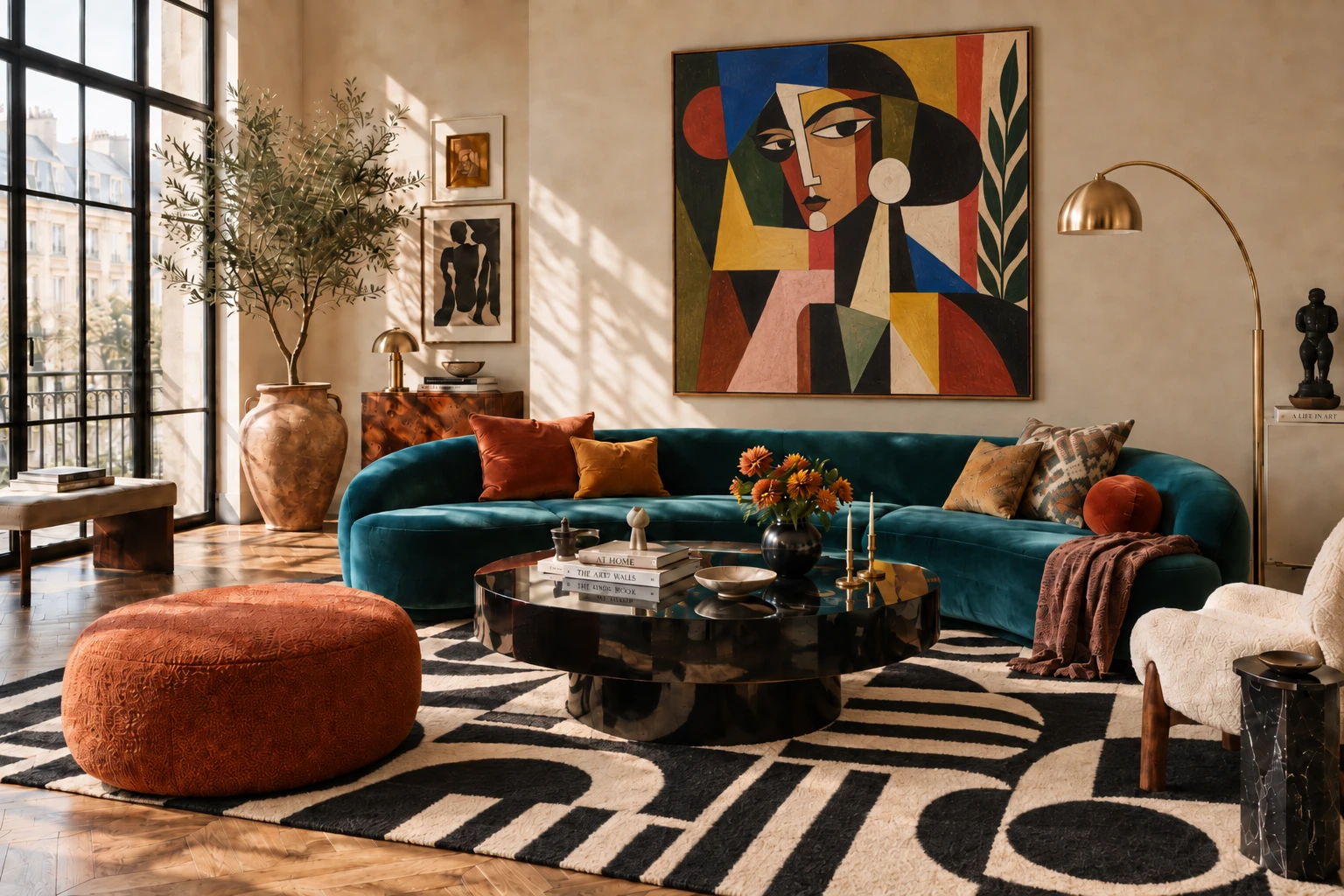
Maximalist Interior Design: How to Be Bold Without the Clutter
Maximalism has an image problem. Say the word and most people picture a room that has lost control: every surface covered, four patterns fighting, a colour scheme that looks like it was chosen by throwing paint chips down the stairs. It's the style people admire on Pinterest and then quietly decide is not for them, because they can't see the line between bold and busy.
Here's the thing designers know: that line is real, and it isn't subtle. Contemporary maximalism is one of the most disciplined styles there is. It looks fearless because a few very deliberate decisions are doing all the work, and everything else has been left alone. More is more, yes, but more of what is the whole question.
If you love colour but you're worried about the result looking chaotic, this is how it's actually done.
Maximalism isn't clutter, it's confidence
The single biggest misunderstanding is that maximalism means quantity. It doesn't. A maximalist room is not a minimalist room with extra objects added; it's a room where the big, structural decisions are brave rather than safe.
Think about the difference between a room with one enormous, vivid painting and a teal velvet sofa, and a room with beige walls, a beige sofa and forty small decorative objects scattered across every surface. The first is maximalist. The second is just cluttered. One made a big decision, the other made a lot of small ones.
So the mindset shift is this: be bold with the few large things and calm with the many small ones. That's the opposite of what most people do when they try to add personality to a room.
Start with light walls (yes, really)
Most people assume maximalism starts with a dark, drenched wall colour. It can, but it's the harder route, and it's why a lot of first attempts feel oppressive rather than joyful.
The more reliable approach for a modern maximalist room is to keep the walls a warm cream or soft limewashed white, and put the colour into things you can actually see the shape of: the sofa, the bed, the joinery, the rug, the art. A warm neutral envelope makes saturated colour look intentional and lets each piece read clearly, the way a gallery wall works better on a pale wall than a busy one.
Save the full colour drench, walls and ceiling and trim in one deep tone, for one room only, and pick a room where enveloping is the point: a dining room you mostly use at night, a study, a powder room. Deep ink blue, aubergine or forest green in a small, intimate room is glorious. The same colour across an entire open-plan living space is exhausting.
Give every room one huge piece of art
If there's a single move that makes a room read as maximalist rather than merely colourful, it's this: one very large, very expressive artwork per room, hung low and generously scaled.
Big art does something small art can't. It anchors the room, it gives all the other colours a source and a permission slip, and it stops the eye from wandering across a dozen competing small things. A large abstract in plum, ochre and forest green above a bed instantly explains why the linen is ochre and the bedside is green. Without it, those choices look accidental.
The rule of thumb: go bigger than feels comfortable. Most people hang art too small and too high. If you're working with a real budget constraint, one oversized canvas will do more for a room than five framed prints, and it costs less than the gallery wall you were considering.
Pair jewel tones with earth tones, never primaries
This is where most maximalist attempts come unstuck. People reach for bold colour and land on a red, a blue and a yellow, and the room ends up looking like a children's playroom or, as one of our own early experiments got described, a French clown.
The fix is a pairing rule. Combine a jewel tone with an earth tone, and let those two carry the room:
- Peacock teal with rust
- Plum with ochre
- Forest green with burnt orange
- Ink blue with warm cream and brass
- Aubergine with tobacco and pale linen
These pairs work because they share a warmth and a depth. They feel collected and grown-up in a way that a primary-colour triad never does. You can add a third colour, but make it the quietest of the three, and repeat each colour at least twice around the room so it reads as a scheme rather than a series of accidents.
If you want a gentler on-ramp, our guide to adding colour to a neutral interior covers the same principle at lower stakes.
One graphic move per room
Pattern is what makes maximalism feel alive, and it's also what tips it into chaos fastest. The discipline that keeps it on the right side of the line: one graphic move per room, and no more.
A black-and-cream checkerboard floor. A striped pedestal table. A rug of big curved colour blocks. A dazzle-stripe tiled wall. Any one of these will carry an entire room. Two of them in the same room and they start arguing, and you get that vibrating, restless feeling that makes a space hard to be in.
Everything else in the room should be plain: solid velvet, solid bouclé, solid linen. The plainness is what makes the one pattern look like a decision.
Punctuate with black
Colourful rooms need something to push against, and black is the most useful tool for it. A black lacquer side table, a sculptural black lamp, a small dark ceramic, a slim black frame. Small doses, but in every room.
Black does two jobs at once. It stops warm, saturated colour from turning syrupy, and it gives the eye a resting point that isn't beige. A room with plum, ochre and forest green plus one black lamp looks composed. The same room with no black in it looks like a fruit bowl.
Brass is the natural partner here, and the reason so many maximalist rooms use it: warm metal is a colour that goes with every other colour, so it ties the scheme together without adding another decision.
Choose sculptural shapes over spindly ones
There's a reason contemporary maximalist rooms are full of curves: a curved sofa, a round ottoman, a pedestal table, a low bouclé bench. Sculptural furniture holds its own against strong colour and big art, where a delicate, leggy piece just disappears.
It also solves a practical problem. Curved and chunky furniture reads as one confident object, so a room full of it feels considered rather than crowded, even when there's a lot going on.
Where to be brave first
Powder room or bathroom. The lowest-risk place to go all in. It's small, guests spend two minutes in it, and a dazzle-striped wall or a colour-drenched powder room is the kind of thing people remember.
Dining room. Mostly used at night, mostly used for occasions. This is the room to drench in ink blue or deep green and hang the biggest painting you own.
Bedroom. Colour on the bed itself, an upholstered headboard in plum or teal, does more than colour on the walls, and it's far easier to change your mind about.
Kitchen. The most permanent and the most expensive to get wrong. If you want colour built in, lacquered cabinetry in a deep tone against a pale stone benchtop is the move, and keep the rest of the room quiet.
Living room. Start with the sofa. A jewel-toned sofa against cream walls is the single highest-impact purchase in maximalism, and it will carry the entire room while you work out the rest.
The mistakes that make maximalism look messy
Adding more instead of choosing bigger. More objects is not more style. Fix: remove the small things and scale up the large ones.
Two patterns in one room. Stripes and checkerboard together is the classic offender. Fix: one graphic move, everything else solid.
A colour scheme with no repetition. Every colour appearing exactly once reads as clutter, not as a scheme. Fix: repeat each colour at least twice.
Primary-colour combinations. Red, blue and yellow together will always read as playroom. Fix: jewel plus earth, every time.
No dark anchor. Colourful rooms without black or a deep tone look unfinished. Fix: one black object per room, minimum.
Drenching the whole house. Deep colour everywhere becomes wallpaper, and stops feeling special. Fix: one drenched room, the rest warm and light.
Try it before you commit
The genuinely hard part of maximalism is the picturing. A teal velvet sofa is a big, expensive, non-returnable act of faith, and no amount of Pinterest scrolling tells you how it will sit against your floors and your light.
That's exactly what StudioReno is for. Take a photo of your own room, drop in a peacock velvet sofa, a burnt-orange ottoman, a huge abstract canvas, all real products, and see it in your actual space. Swap the teal for plum, try the checkerboard floor, take the whole thing back to neutral if you hate it. No 3D software, no showroom visits, no expensive mistakes.
Not sure whether maximalism is really your style, or whether you're closer to Dark & Moody or Modern Heritage? Take the two-minute style quiz and find out, then build it into a room you can actually see.
FAQ
What is maximalist interior design? Maximalism is a style built on bold, deliberate decisions rather than restraint: saturated colour, oversized art, sculptural furniture and rich materials. It's often confused with clutter, but a well-done maximalist room is highly disciplined, a few large brave choices with everything else kept calm.
Is maximalism still in style? Yes, and it has shifted. The current version is lighter and more contemporary than the heavy, pattern-on-pattern maximalism of a few years ago: warm neutral walls, one huge artwork, jewel-and-earth colour pairings and sculptural furniture, with pattern used once per room rather than everywhere.
How do I make a maximalist room without it looking cluttered? Be bold with the few large things and calm with the many small ones. One oversized artwork, one strong colour pairing, one graphic pattern, one black anchor, and plain solid fabrics everywhere else. Clutter comes from lots of small competing objects, not from colour.
What colours work best for maximalist interiors? Pair a jewel tone with an earth tone: peacock teal with rust, plum with ochre, forest green with burnt orange, ink blue with cream and brass. Avoid primary-colour combinations, which read as playful rather than sophisticated, and repeat each colour at least twice around the room.
Do maximalist rooms need dark walls? No, and light walls are usually easier. Warm cream or limewashed white walls let saturated furniture and big art read clearly. Save a full colour drench for one small, intimate room such as a dining room, study or powder room.
Where should I start if I want a bolder home? Start with the powder room or bathroom, where the stakes are lowest, or with a single jewel-toned sofa in the living room. Both give you a real sense of how you feel living with colour before you commit to cabinetry or paint.