How to Choose a Paint Colour (Without the Regret)
A paint chip almost never looks the same on your wall, which is why so many colours disappoint once they're up. Here's how to narrow it down, test it properly in your own light, and avoid the most common and costly mistakes.
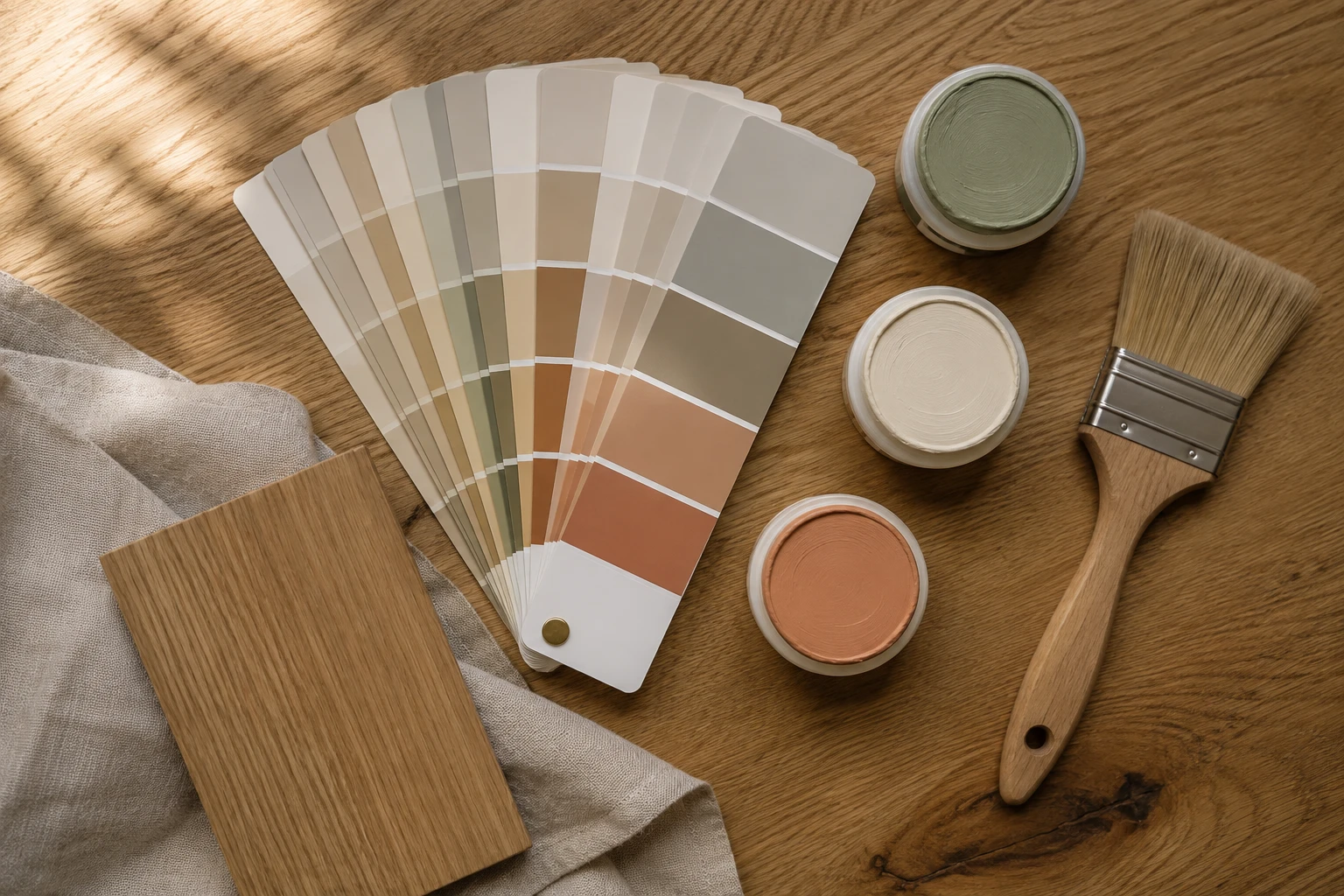
Choosing a paint colour should be the fun part. Instead it's the decision people agonise over most, and for good reason: a colour that looked perfect on a tiny chip in the shop can turn cold, muddy or garish the moment it's on your wall. Almost everyone has a story about a "mistake wall" that had to be repainted. The good news is that bad paint choices are almost always avoidable, and it comes down to how you test, not luck.
Here's how to narrow the field, test a colour properly, and get it right the first time.
Why paint never looks like the swatch
Three things conspire against you, and understanding them is half the battle:
Light changes everything. The same colour looks completely different in bright midday sun versus a dim, north-facing corner (in the southern hemisphere, north-facing rooms get the most sun; flip that if you're up north). Paint that looked warm in the shop can read grey and flat in your actual room.
Undertones hide in plain sight. Every colour has an undertone, a subtle base of green, pink, blue or yellow. A "simple grey" can turn out lilac or green on your wall. Undertones are the number one reason a colour disappoints, and they only reveal themselves at full scale, next to your existing finishes.
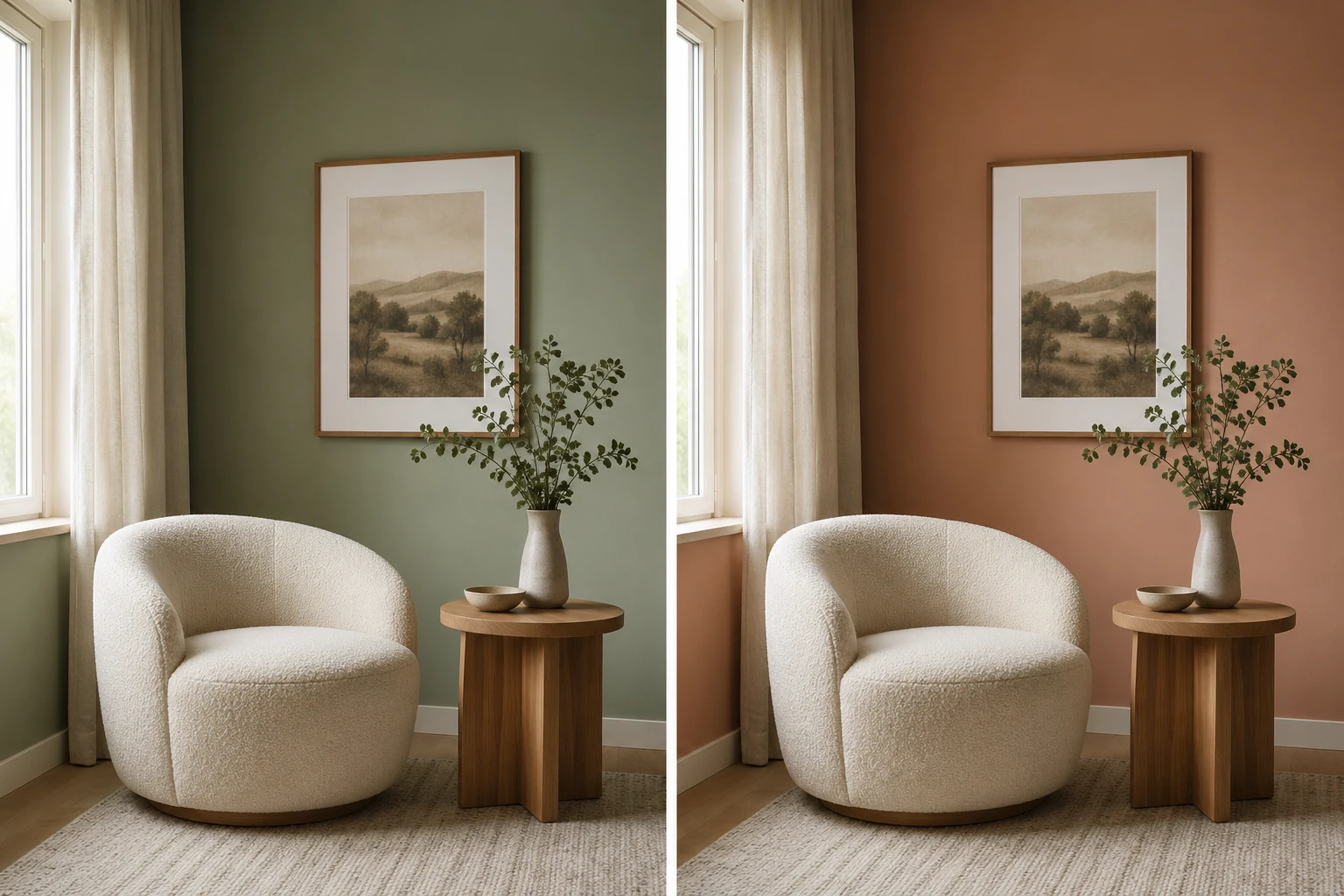
A chip is tiny; a wall is huge. Colour intensifies as it covers more surface. A soft beige on a chip can become an overwhelming yellow across four walls. You are never really judging the colour until you see it big.
How to choose a paint colour, step by step
1. Start with the whole scheme, not the colour alone
A paint colour is never chosen in isolation. It has to work with your floor, your furniture, your light and your other finishes. Decide the overall mood first, then find a colour that serves it.
2. Learn your undertones
Before you fall for a colour, work out its undertone by comparing it against a pure white and against your existing timber, stone and textiles. This one habit prevents most "why does it look purple?" disasters.
3. Narrow to two or three contenders
Don't test fifteen. Get to a shortlist of two or three that suit your light and scheme, then test those properly. A tight shortlist makes the final decision far easier.
4. Test big, and test in place
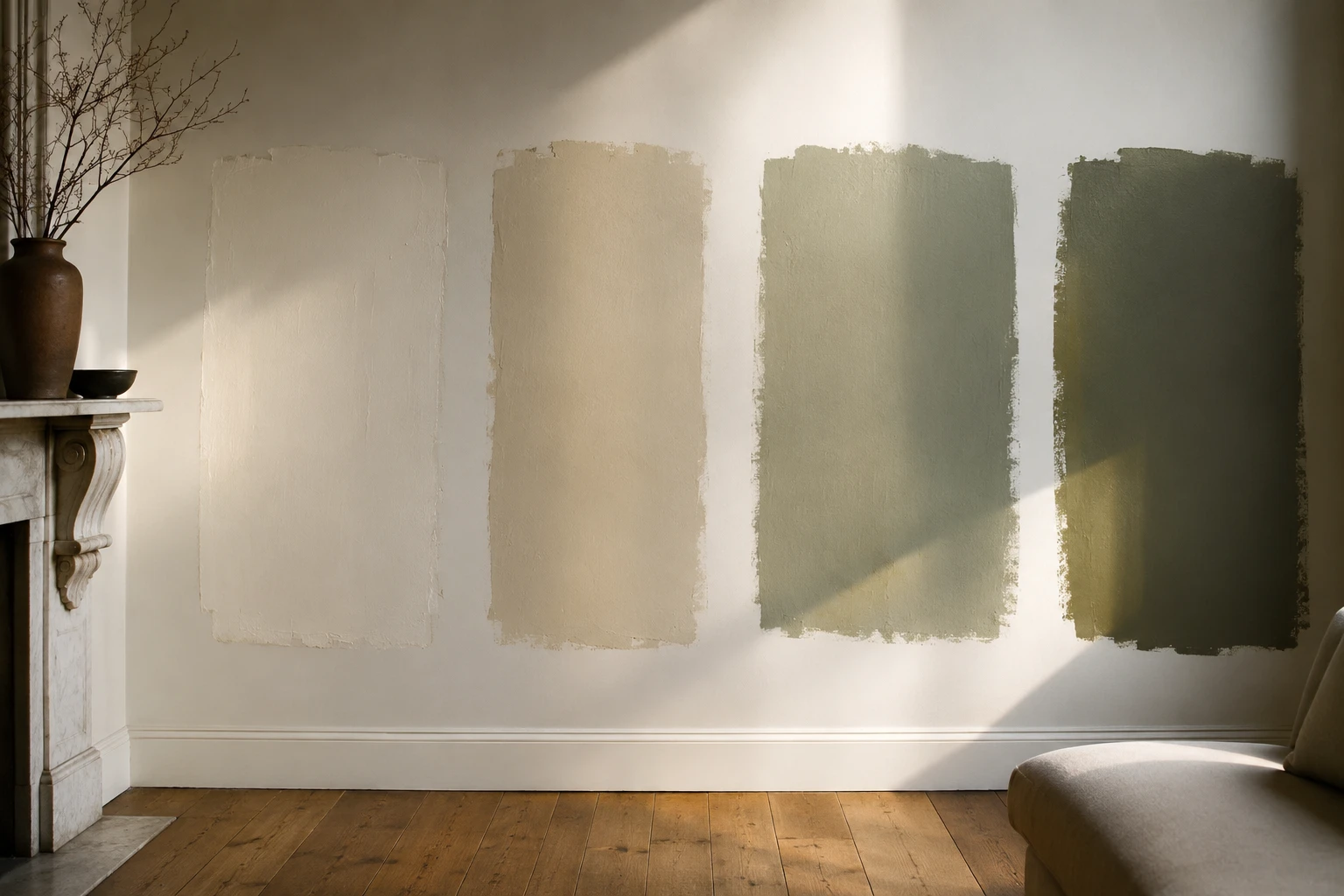
If you're using sample pots, paint large patches (at least A3 size), on more than one wall, and ideally on a moveable board you can hold against different corners. Never judge from the little chip.
5. Watch it across a whole day
Look at your test patches in the morning, at midday, and at night under your actual lamps. A colour you love at noon can turn on you after dark. Give it a few days before deciding.
6. Consider your light honestly
Warm-toned colours flatter low-light and south-facing rooms; cooler colours can fall flat without strong natural light. Match the colour to the room you actually have, not the sunlit showroom.
The modern shortcut: see it on your wall first
Here is the honest problem with the traditional method: even done properly, it's slow and expensive. Sample pots cost money, painting patches takes an afternoon, and you still only see the colour on a patch, not the whole room with your furniture in it. Most people give up after two pots and just commit, which is exactly how mistake walls happen.
This is where testing digitally first changes everything. With StudioReno you can take your actual room, try a colour across the whole space, see it with your real furniture and finishes, and view how the whole room feels before you buy a single sample pot. Try forest green, then warm white, then clay, in seconds, and only spend money on the one you're sure about. It turns paint-picking from an expensive guessing game into a confident decision.
A sample pot shows you a patch. Seeing it in your room shows you the answer.
Test paint colours in your real room with StudioReno. Free early access →
The most common paint mistakes (and how to dodge them)
Choosing from a tiny chip instead of a large sample. Ignoring undertones. Not testing in your own light. Matching the colour to how it looks on a screen (screens lie even more than chips). And picking a trend colour that doesn't suit your room's light just because it looked good in someone else's home.
How to choose paint colours FAQ
Why does my paint look different on the wall than the swatch? Because of light, scale and undertones. A colour intensifies across a large surface, shifts dramatically with your room's natural and artificial light, and reveals hidden undertones that a small chip hides.
How many paint colours should I test at once? Narrow to two or three contenders. Testing too many makes it harder to decide, not easier. Shortlist first, then test those properly.
Should I really test paint in different lighting? Yes. View your samples in morning, midday and evening light, and under your actual lamps. A colour can look completely different at night, and that's when you'll often be using the room.
What are undertones and why do they matter? An undertone is the subtle underlying hue in a colour (green, pink, blue, yellow). They're the main reason greys turn lilac or whites turn cream. Always check a colour's undertone against your existing finishes.
Why is white paint so hard to choose? Whites have the strongest undertones of all relative to how "neutral" we expect them to be, so they swing warm or cool dramatically with light. Test whites especially carefully, and always in your own room.
The takeaway
Great paint choices aren't luck, they're testing. Understand your light and undertones, shortlist to a few, and see the colour at full scale before you commit. The fastest, cheapest way to do that now is to try it in your actual room digitally first, so the only pot you buy is the one you already know you love.
See your paint colour on your wall before you buy. StudioReno early access →